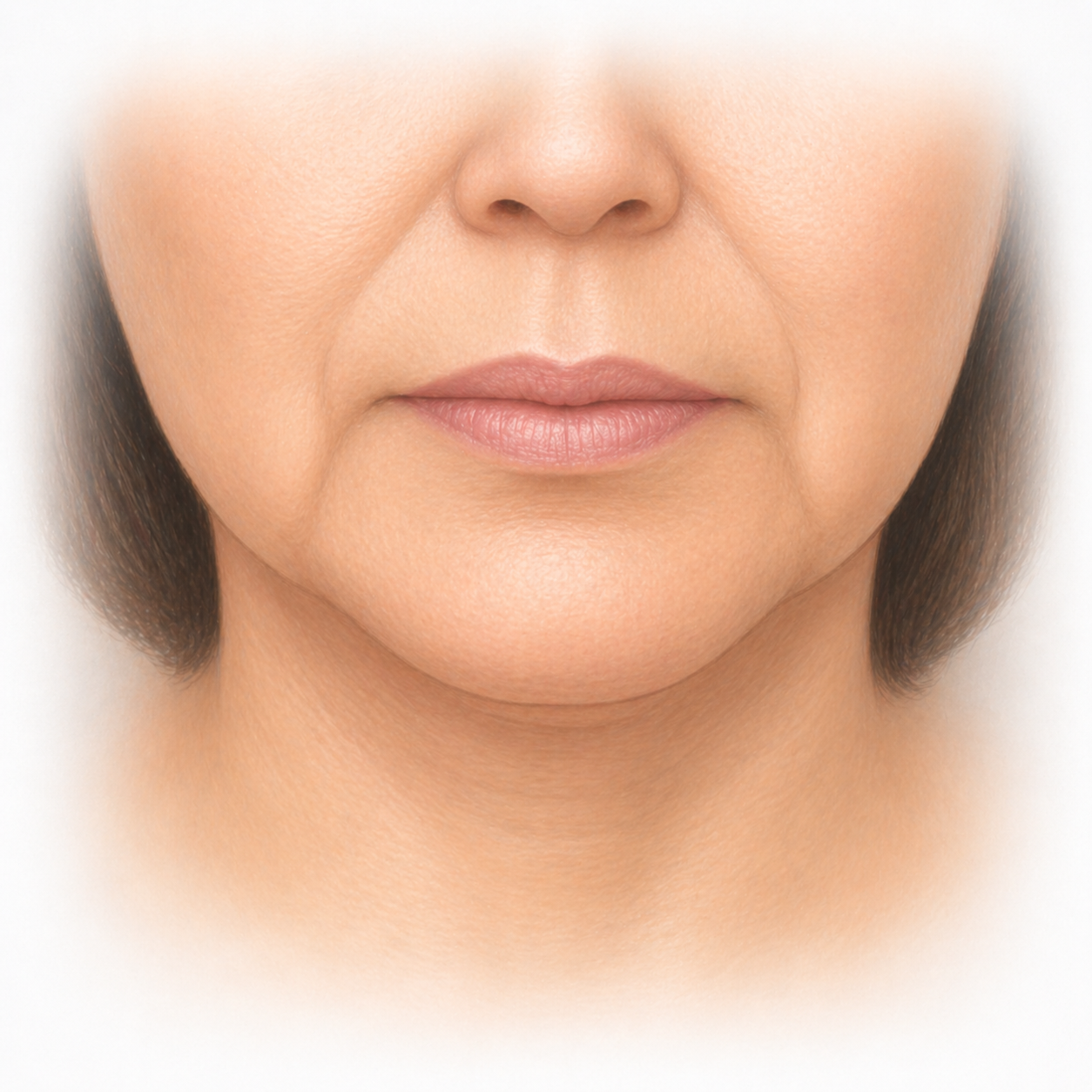
A hollow look in the face is one of the common changes that starts to bother people as they get older. Sometimes it is the cheeks that seem flatter than they used to be. Sometimes it is a hollow under the eyes, or a loss of fullness at the temples. In other people several areas start to look hollowed, as if the underlying support everywhere has thinned and the skeleton of the face is becoming more obvious.
People often describe this in different ways. Some say they look tired. Some say they look gaunt. Some say they look older, even though they cannot put their finger on exactly what has changed.
In youth, the face usually has smooth transitions between one area and the next. The cheeks are gently rounded, the temples are softly filled, and the area under the eyes blends smoothly into the upper cheek. With age, those transitions can become less smooth. Some areas lose volume. Some descend. Some become more hollow because the surrounding areas change. Weight loss can also make this more obvious.
This article looks at the common areas of facial hollowing, why they happen, and what can sometimes be done about them.
Why do my cheeks look flat?
When patients tell me that their face looks tired or “drawn”, the cheeks are often part of the reason. Full, gently curved cheeks are associated with youth because they reflect the way the midface is built when the skin, fat and underlying bone are ini their original positions and at their original sizes. Again changes these things.
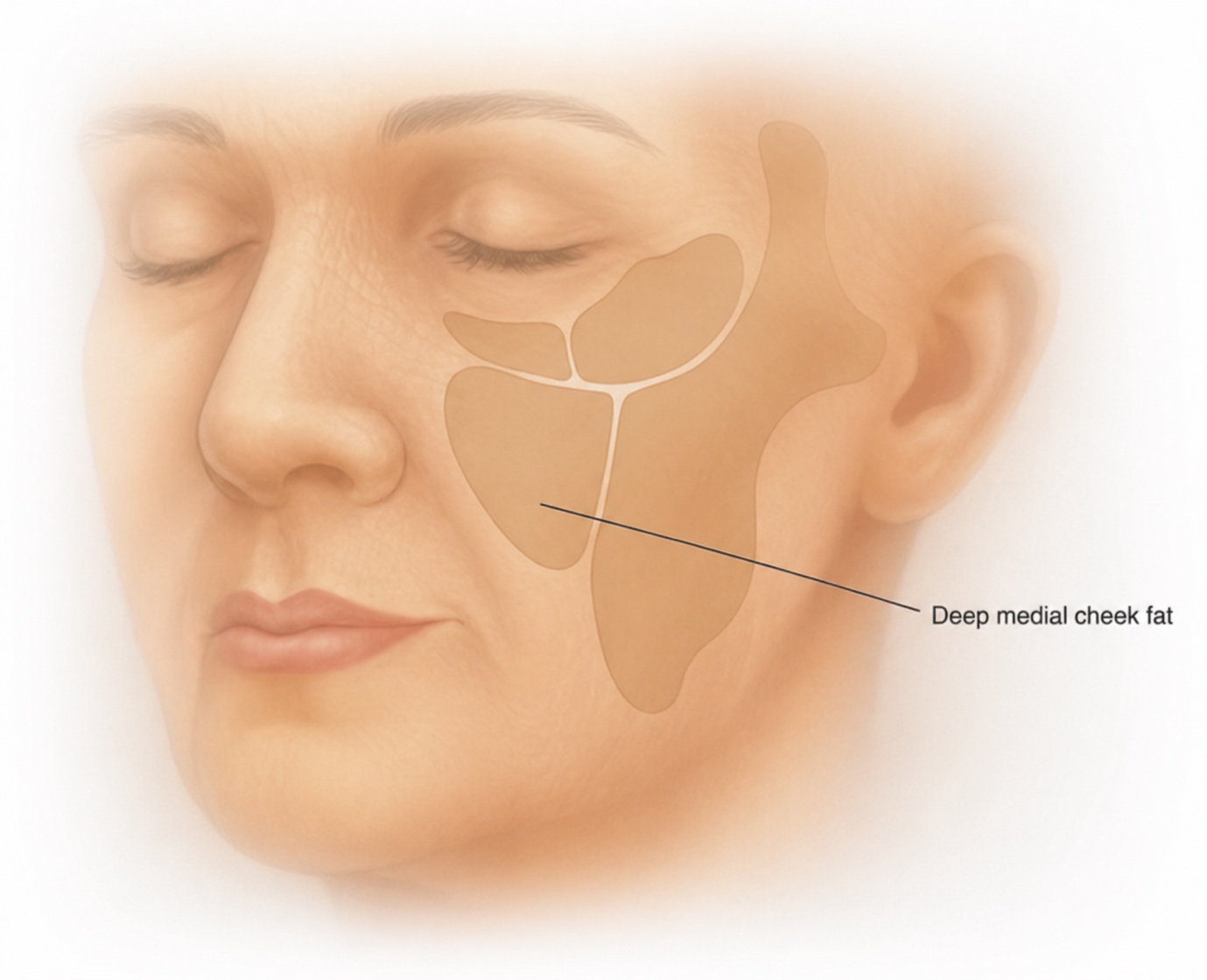
The main reason for ageing changes here is that the fat compartments of the cheek change over time. The deep medial cheek fat in particular tends to shrink and shift downwards. The result is that the upper cheek can look flatter, while the lower cheek and nasolabial fold may become more prominent. The face has not simply “lost fat everywhere”. Rather, some is lost, and where it is located has changed.
The skin also changes. Collagen, elastin and hyaluronic acid all decline with age, which means the skin becomes thinner and less springy. It drapes differently over the structures underneath it. A cheek that once looked softly rounded can start to look flatter and less supported.
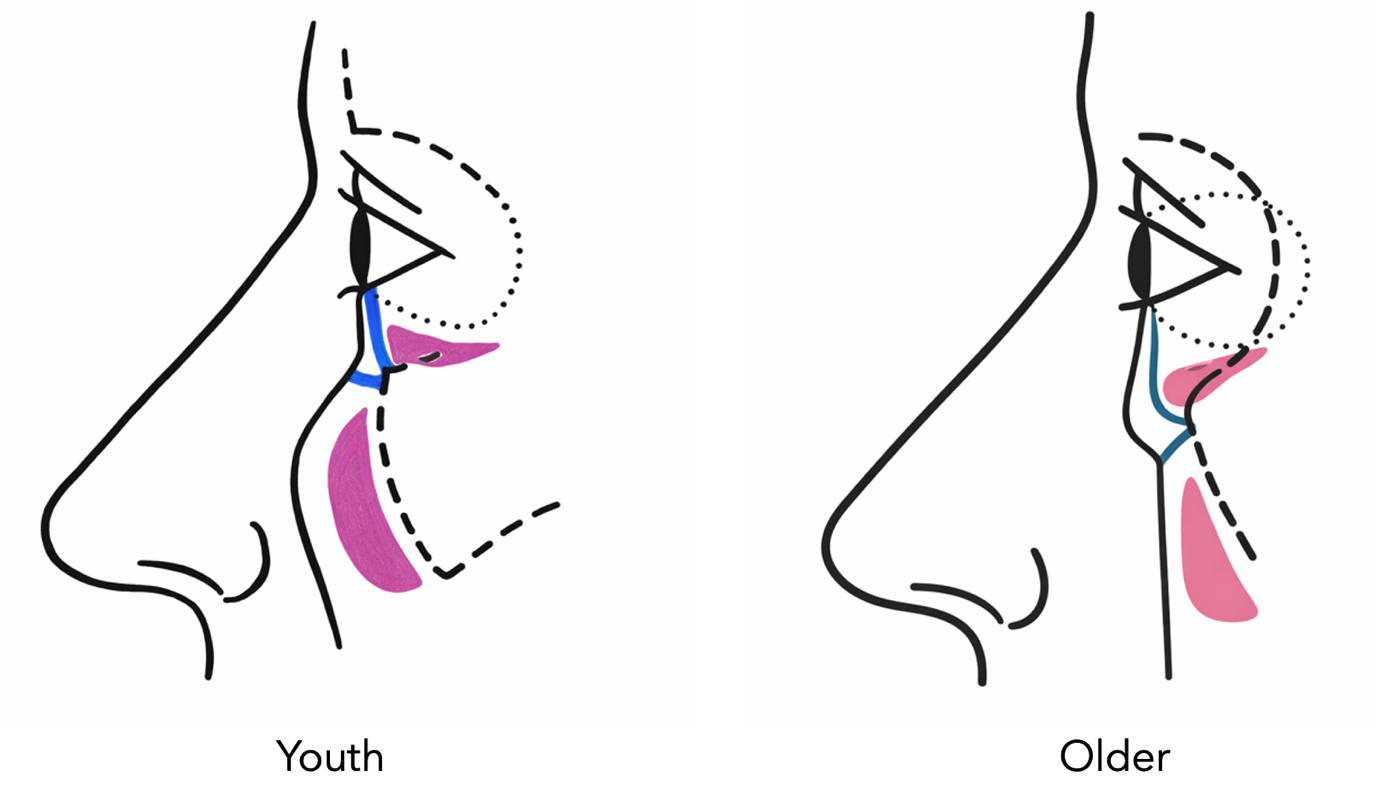
The bones of the midface also change with age. The bones around and under the eye socket can slowly lose projection. This matters because the cheek soft tissue sits on top of that bony framework. If the framework recedes, the soft tissue loses some of the support that once held it forward.
Some people naturally have less cheek projection than others. Others notice flatness especially oafter losing weight.
Why are my temples hollow?
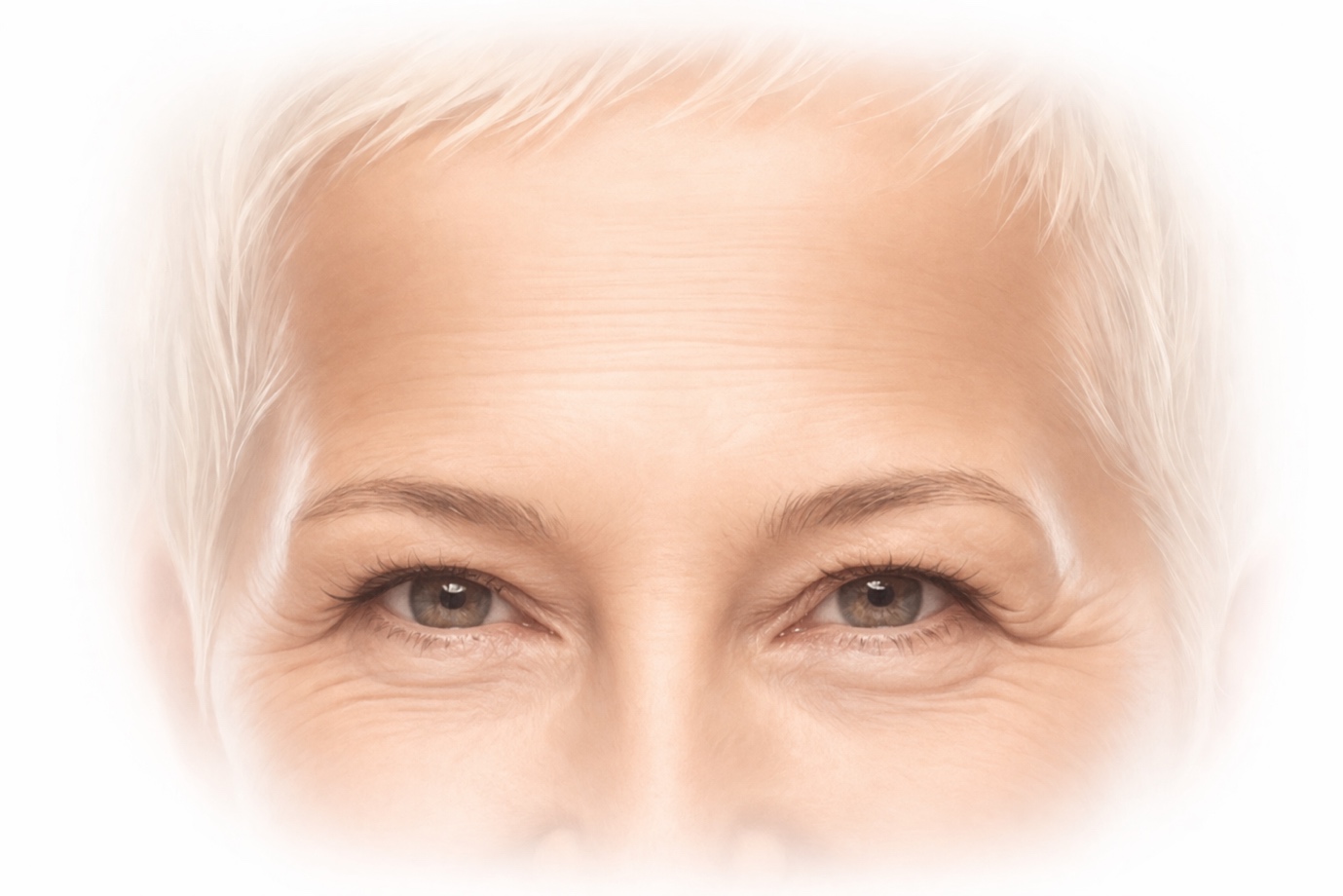
Temple hollowing is one of those changes that people often do not notice until it becomes quite marked. It can make a surprising difference to the overall look of the face.
The temples sit at the side of the forehead, between the outer brow and the hairline. In youth they are usually softly filled, so the side of the upper face flows smoothly into the cheekbone below. With age, that area can become concave. The upper face starts to look more skeletal, and the outer brow can appear less supported.
There are a few reasons for this. One is simply loss of fat in the temple region with age. Another is that the bony framework of the skull changes subtly over time, so the soft tissue is sitting on a different shape than it used to.
Temple hollowing is often overlooked because people focus on more obvious concerns such as frown lines, eyelid heaviness or under-eye bags. But a hollow temple can contribute to an older or more tired look in a way that is hard to describe. It can also make the upper face look narrower, especially if the lower face is becoming wider due to sagging.
This is an area where treatment needs to be approached carefully. The temple contains important blood vessels, and it is not a place to be casual with treatment. When it is treated, the aim is usually not to make the temple “full” in an obvious way, but simply to restore a smoother contour between the forehead, brow and cheek.
What are "tear troughs"?
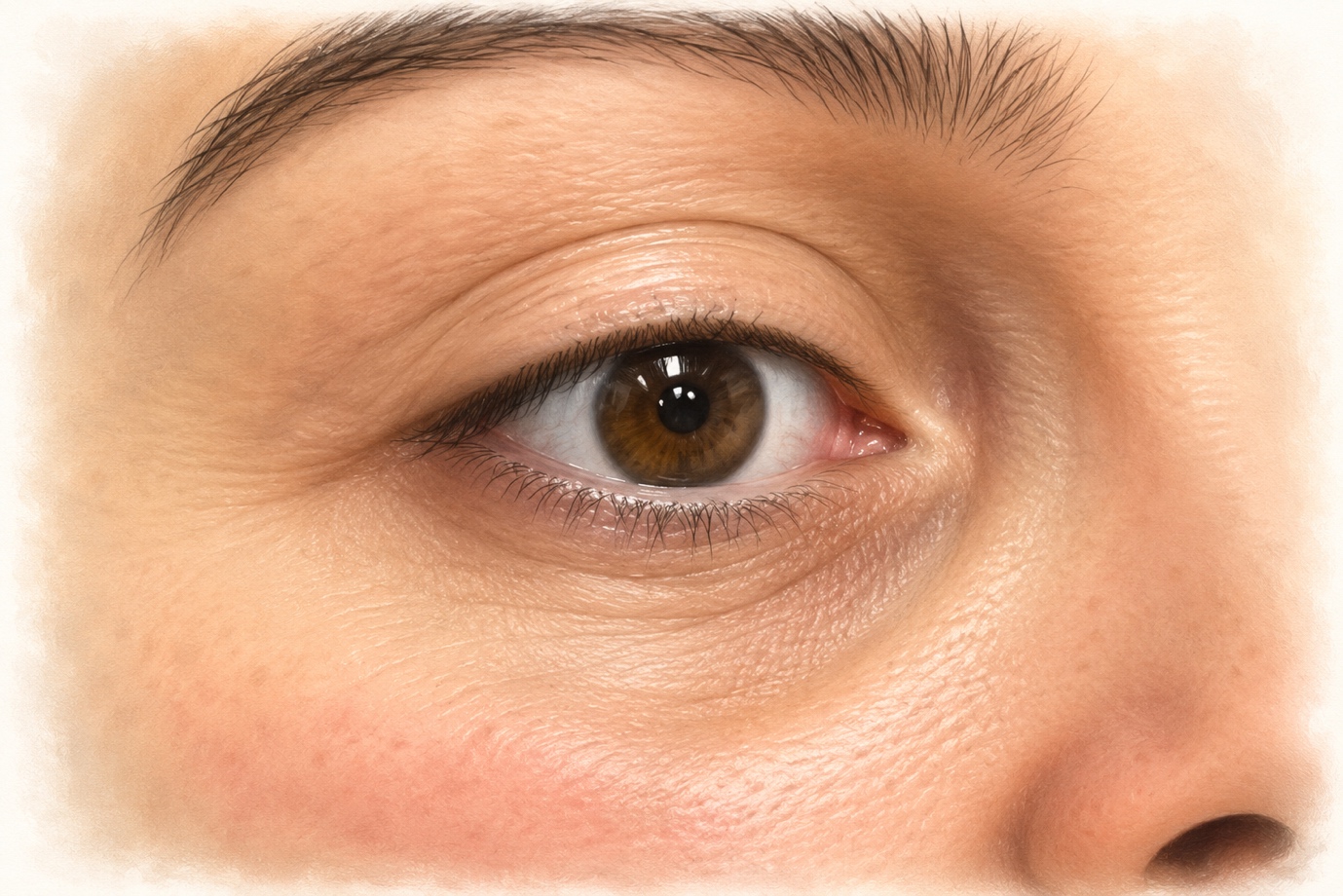
People often use this term loosely to describe any under-eye problem, but a true tear trough is a hollow.
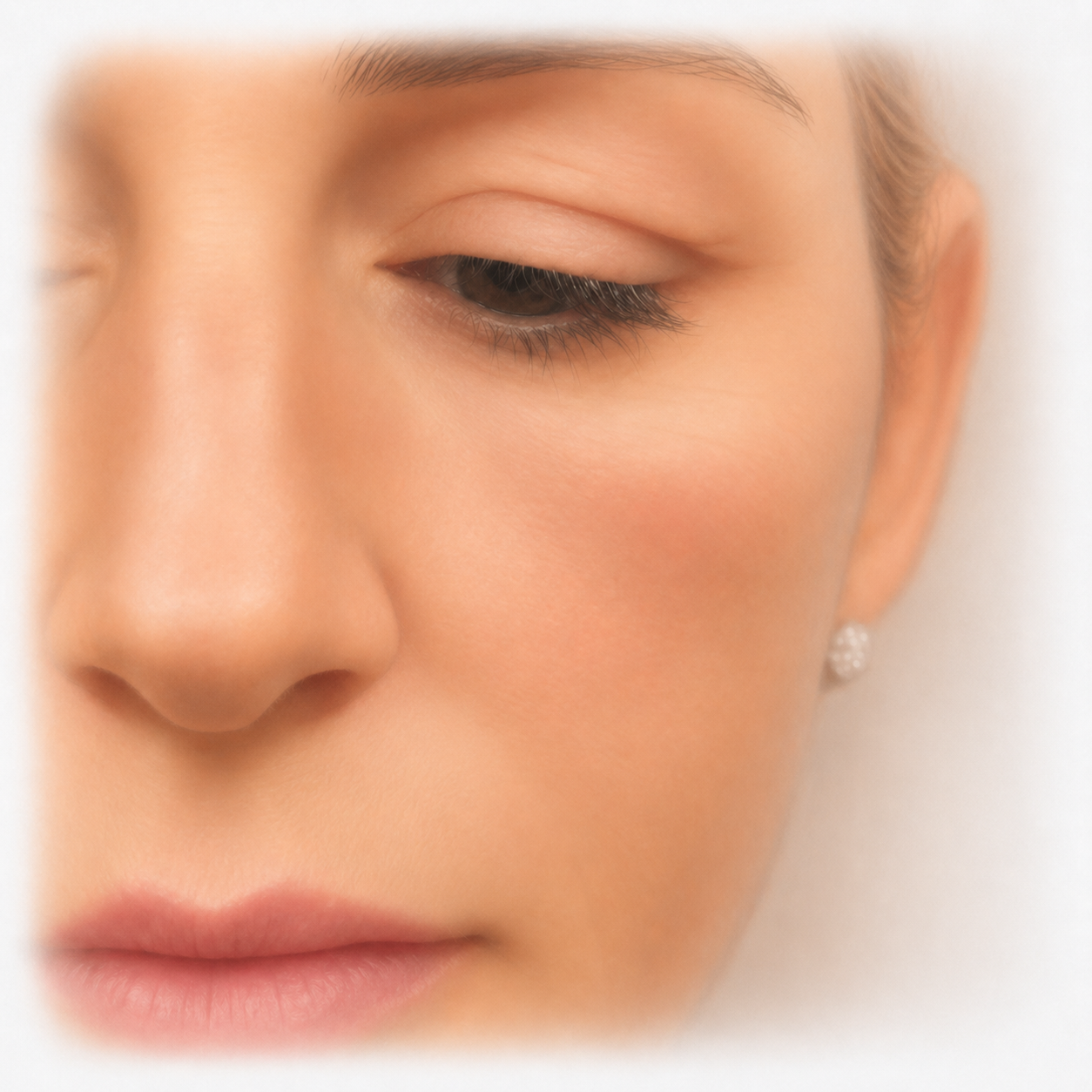
The tear trough is the semicircular hollow that runs from the inner corner of the eye down and out across the upper cheek. It's called a "trough" because it looks like it could catch tears in it. In some people it is present from a young age because of the way the face is built. In others it becomes more obvious with age.
The reason it forms is that the under-eye area is a junction between different areas of tissue. there is a ligament that tethers the skin to the bone -it runs around the edge of the eye socket. Below that is the thicker tissue of the upper cheek. Above it, there can be less fullness, and thus a tear trough exists.
The skin in this area is also thin, so the darker muscle and blood vessels underneath can show through more easily. That is one reason tear troughs often look dark as well as hollow.
Treatment in this area needs care. In the past it was more common to add volume directly into the tear trough itself, but that can be disappointing in people who are prone to eye bags. Before embarking upon that kind of treatment, it is prudent to improve support in the cheek below the eye and then reassess.
What other areas get hollow?
The cheeks, temples and under-eye area are the places where people usually notice hollowing first, but they are not the only ones. Volume can also be lost from the area in front of the ear, from the chin, and from the area beside the nostril, at the upper end of the nasolabial fold.
These changes are less obvious than hollow temples or flat cheeks, but they still conribute. Chin volume loss can make the lower face look weaker and can make jowls stand out more. Loss of support beside the nose can make the nasolabial fold look deeper. Even subtle hollowing in front of the ear can contribute to a more drawn or less softly contoured look overall.
What happens to the face after weight loss?
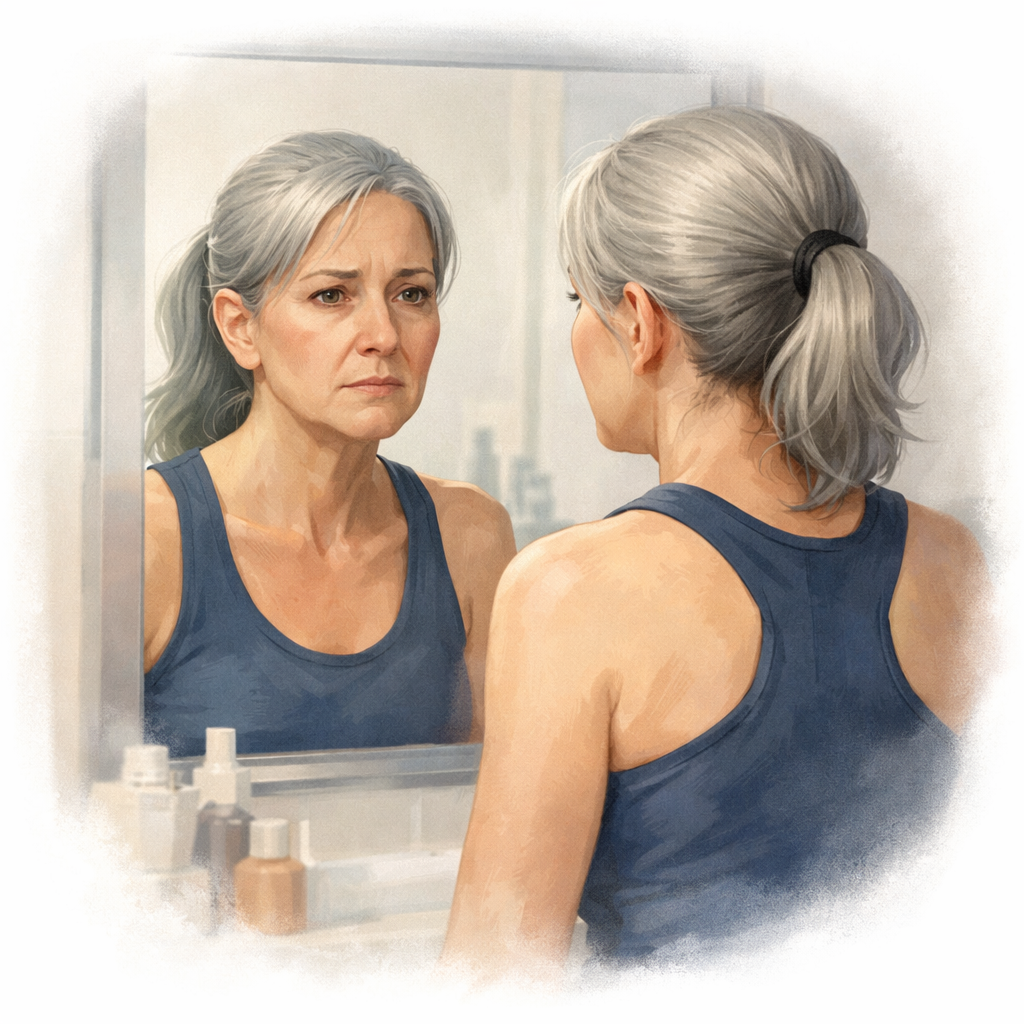
Weight loss can make the face look healthier, sharper and more defined. It can also make some people look older, particularly if they lose a lot of weight or lose it quickly.
This is because fat in the face does not disappear in a neat or selective way. The face contains multiple fat compartments, and when total body fat falls, the face can lose some of the soft volume that once helped it look youthful.
In younger people this may simply make the jawline and cheekbones look more defined and result in a face that looks leaner and more sculpted. On the other hand, a person in their fifties may lose the same proportion of weight and find that their cheeks look flatter, their temples more hollow, and their under-eye area more tired. The difference is that the older face has already lost some collagen, elasticity and structural support, so there is less reserve.
This does not mean that weight loss is a bad thing. If a person is overweight, losing weight can improve health, mobility and confidence. But it does mean that the face may not always respond in the way people hoped for. Some patients are surprised that after doing all the right things for their health, they actually look older rather than younger. When that happens, it is usually because weight loss has unmasked the normal changes of facial ageing.
For this reason, I think it is important to look at the face as a whole. If someone is bothered by a hollow or gaunt look after weight loss, the answer is not to put the weight back on. Sometimes the answer is a carefully chosen treatment to restore support in the areas that have become hollow.
F.A.Q.
1. How can I have hollow areas and jowls at the same time?
Facial ageing is not a simple process of the whole face either “gaining volume” or “losing volume”. Different parts of the face often change in different ways at the same time.
For example, the upper and middle part of the face may lose support with age. The temples can become hollow, the cheeks can flatten, and the area under the eyes can start to look sunken. At the same time, some of the lower face soft tissue can descend. That is how a person can end up with both hollows in one part of the face and heaviness or jowls in another.
Weight loss can make this combination even more obvious. A person may lose volume in the cheeks and temples, making the face look hollow, while still retaining jowls or heaviness around the lower face.
2. How can I lose weight without my face looking hollow?
Unfortunately, there is no way to tell the body to lose fat from one area while keeping it in another. When you lose weight, the face is often part of the package, and genetics has a big influence on how much fullness you keep.
What you can do is avoid unnecessary swings in weight. Rapid weight loss, repeated dieting, and losing more weight than you really need can all make facial hollowing more obvious, especially as you get older. In general, the safest approach is to aim for a healthy, sustainable weight rather than the lowest possible number on the scales.
It also helps to protect the facial support you do have. Sun protection, not smoking, and avoiding major weight fluctuations all make sense. None of these will “lock in” facial fat, but they may help preserve the skin, muscle and overall structure that support the face.
So the honest answer is that you cannot selectively keep fat in the face while losing it elsewhere. What you can do is lose weight gradually, avoid overshooting, and accept that in some people there is a trade-off between a leaner body and a fuller-looking face.
3. Can “face yoga” reduce face fat from certain areas?
No, not in the way many social media posts imply.
Exercising a muscle can strengthen that muscle, but it does not selectively burn fat sitting above it. That is true in the face just as it is elsewhere in the body. So while facial exercises may change the way some muscles are used, there is no good reason to think they can melt fat from a chosen part of the face.
In fact, if the concern is facial hollowing, deliberately trying to reduce facial fat is often the opposite of what is wanted. In younger people a very lean face may look sculpted. In older people it can make hollows and folds more obvious.
4. Will false eyelashes make my eyes look more open?
False eyelashes and heavier eye makeup can draw attention to the lash line and create the impression of a larger, more open eye.
That can be helpful when age-related changes around the eyes, such as hollowed temples, are making them look smaller or more hooded. With age, the outer brow can descend, the upper eyelid can look heavier, and hollowing of the temple can make the tail of the brow look shorter and less supported from underneath. Together, these changes can make the eyes look less open than they used to.
False eyelashes do not change those underlying causes, but they can partly disguise them by improving the frame around the eye.