Aesthetic medicine is sometimes portrayed as being mainly concerned with women and the visible signs of ageing. That is a very limited view of the subject.
Men may seek advice about hair thinning, acne, acne scarring, sun-damaged skin, unwanted hair, prominent expression lines, facial proportions or an appearance that seems persistently tired or severe. Others notice changes following weight loss or feel that their outward appearance no longer reflects how healthy and energetic they feel.
These concerns can begin in a man’s twenties and continue throughout life. Men’s aesthetic medicine is therefore not simply about male ageing. It includes a broad range of hair, skin and appearance-related concerns that can affect men at different ages.
Having a concern does not mean that treatment is necessary. Normal faces have lines, asymmetry, pores, scars and anatomical variation. Nor is there one correct way for a man to look. A responsible consultation should help identify the cause of a concern, explain whether anything useful can be done and include the option of undertaking no treatment at all.
Why might men want a different approach?
Some men are comfortable seeking advice from an aesthetic clinic. Others feel uncertain about whether such a clinic is intended for them.
They may associate cosmetic treatment with exaggerated changes, conspicuous results or an environment focused predominantly on female beauty. A man seeking advice about thinning hair, acne scarring or sun-damaged skin may not consider himself interested in cosmetics at all.
Men also frequently describe their objectives differently. Some say that they appear older, more tired, worried or severe than they feel. Others have one specific concern and do not want anything else changed.
This is where a conservative medical approach can be valuable. The starting point is to understand the concern rather than to assume that a particular procedure is the answer.
Hair thinning
Male-pattern hair loss, also called androgenetic alopecia, commonly begins with recession at the temples, thinning over the crown or a gradual reduction in the density and thickness of the hair.
It develops because genetically susceptible follicles respond to dihydrotestosterone, a hormone produced from testosterone. Over successive hair cycles, affected follicles become smaller and produce progressively finer and shorter hairs. Eventually, some hairs become so fine that they provide very little visible scalp coverage.
This process can begin in the late teens or twenties. For a young man, the first signs can be upsetting, particularly when he does not know how quickly the thinning will progress. It is important to provide realistic information without implying that normal hair loss is a medical emergency or that every man requires treatment.
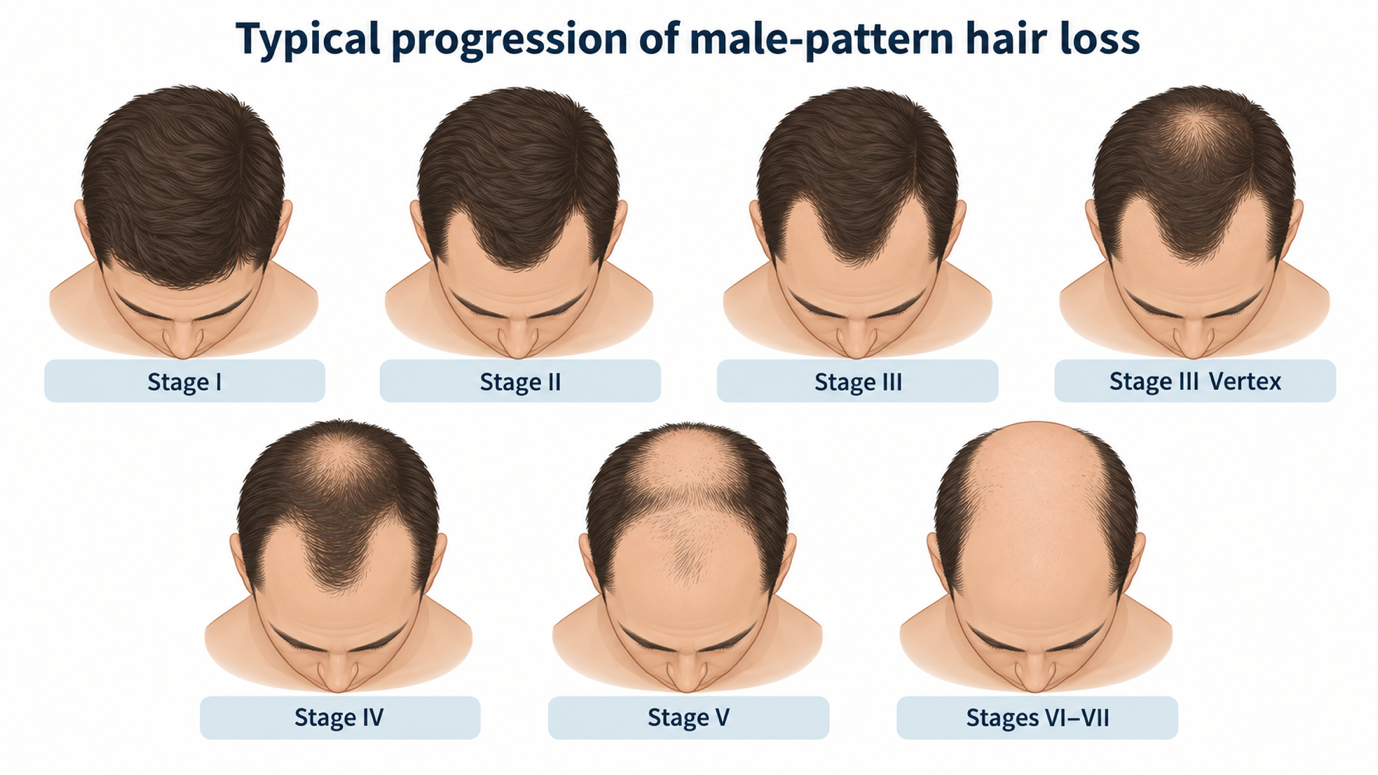
Earlier assessment can be useful because available treatments are generally better at preserving or strengthening active follicles than recreating follicles in an area that has been bald for many years.
Not every case of hair loss is male-pattern baldness. Sudden shedding, well-defined bald patches, scalp inflammation, scarring, nutritional deficiency, endocrine disease, medication and significant physical or psychological stress can produce other patterns of hair loss.
The distribution and rate of progression, scalp examination, family history and general medical history all help establish the likely diagnosis. Blood tests or assessment by a dermatologist may sometimes be appropriate.
What can be done about male-pattern hair loss?
The available approaches can be divided broadly into measures intended to preserve or strengthen existing hair, procedures intended to redistribute or potentially stimulate follicles, and cosmetic methods that disguise reduced density.
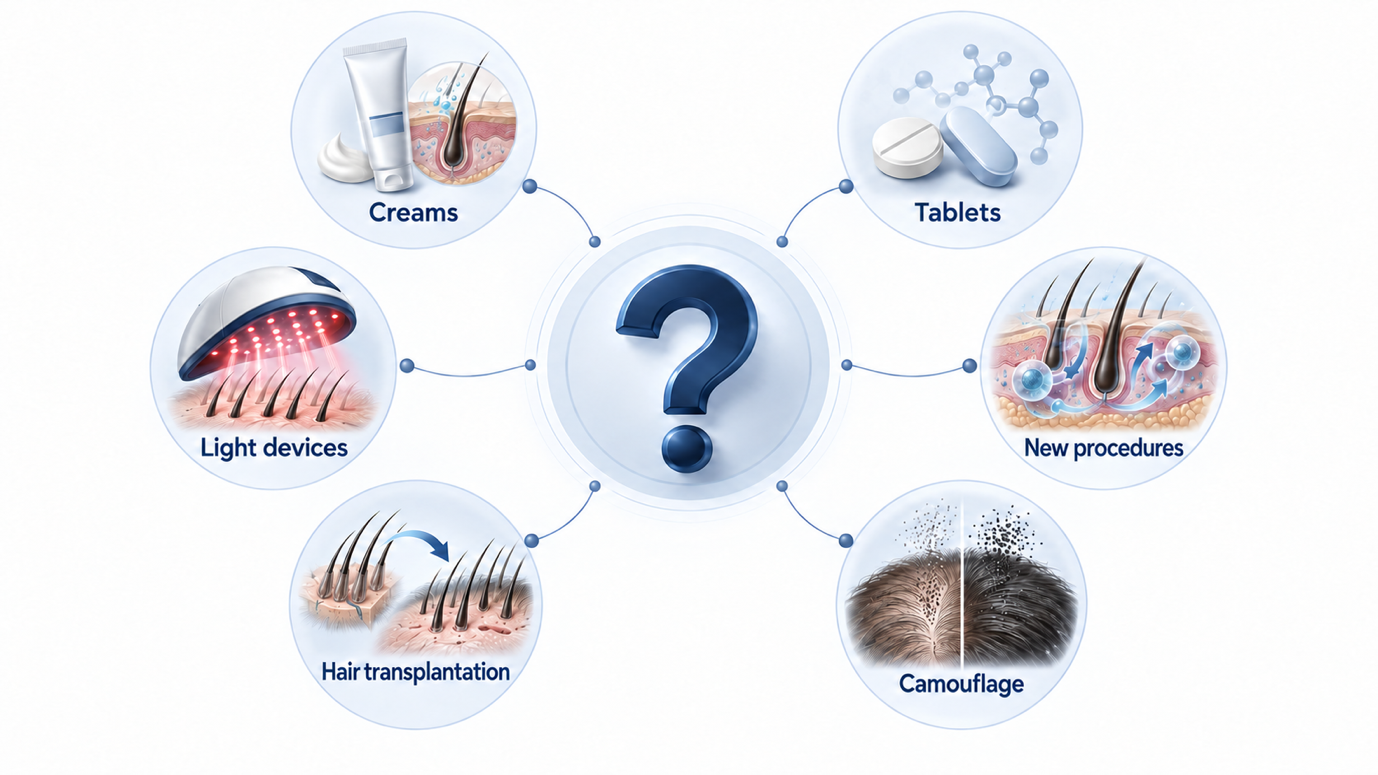
1. Cosmetic camouflage
This is also a legitimate choice. Hair fibres, scalp micropigmentation, hair systems and changes in hairstyle can reduce the visibility of thinning without attempting to alter the biological process. Some men prefer to shave their hair closely or undertake no intervention.
2. Non-prescription topical medicine
is available in Australia for male-pattern hair loss. Evidence shows that it can help some men maintain existing hair and produce a modest increase in density. It must be used consistently, and any benefit generally requires continued use. Scalp irritation and unwanted hair growth outside the treated area can occur.
3. Oral medications
Other medical options may be considered after an individual assessment. Because some oral hair-loss medicines are prescription-only, discussion of their suitability, expected benefits and potential adverse effects belongs within a private medical consultation rather than public advertising. A prescription should never be assumed before that assessment has occurred.
4. Light devices
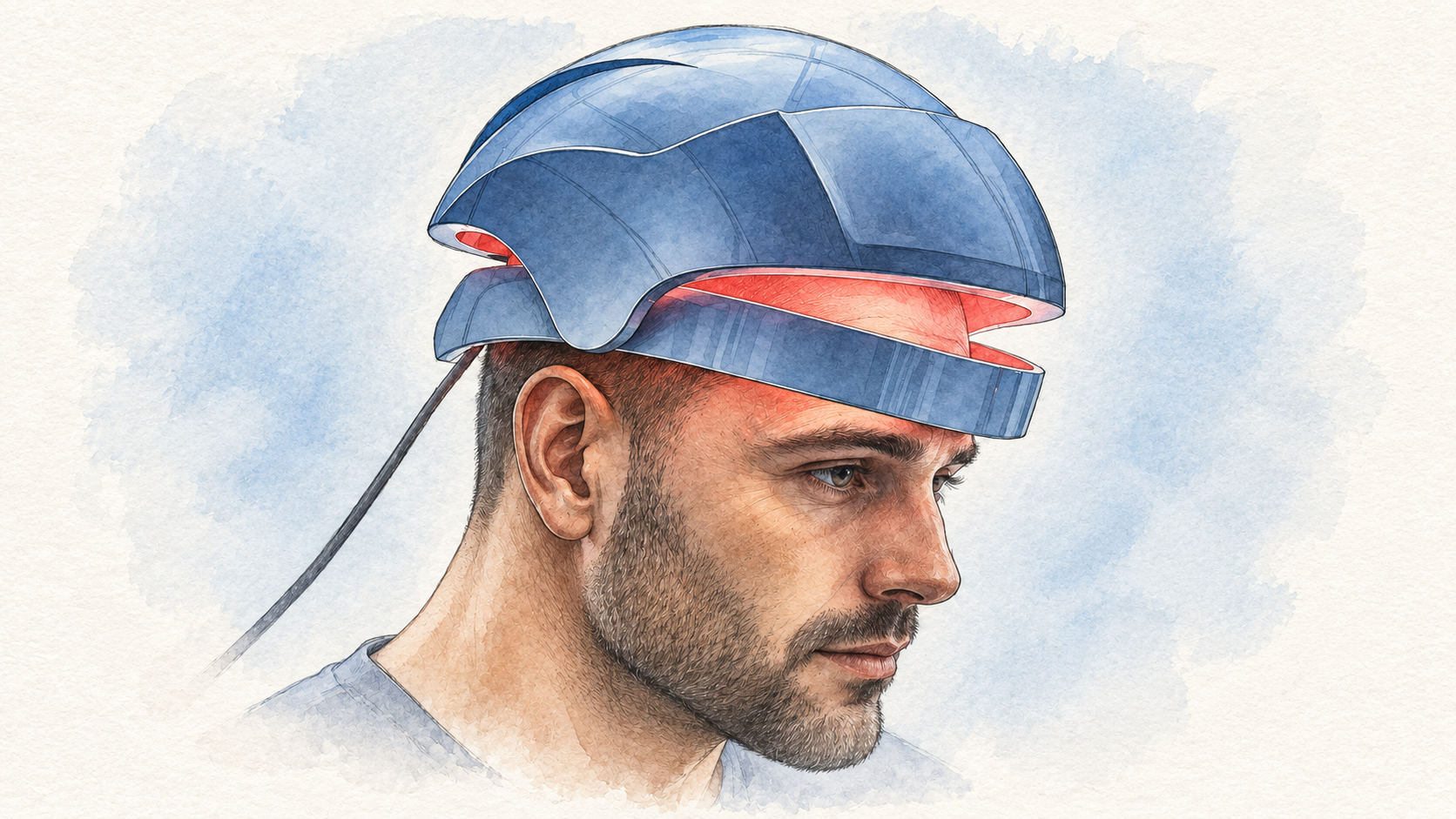
Low-level light devices are available in forms such as caps, helmets and combs. Some properly designed devices have produced modest increases in hair density in controlled studies. Results vary between devices and patients, regular use is necessary and long-term evidence remains less extensive than that supporting established medical management.
5. Procedures
Some procedures use components collected from the patient’s own blood or small samples of scalp tissue. The biological aim is to influence the environment surrounding existing follicles. Research into these regenerative approaches has produced some encouraging findings, but the evidence is still developing. Studies are often small, preparation and treatment methods vary, and follow-up may be relatively short. It is not yet possible to predict confidently which men will obtain a noticeable improvement, how long an improvement will last or how much additional benefit these procedures provide beyond established management. Descriptions such as “creating new follicles,” “reversing baldness” or “curing hair loss with stem cells” go beyond what current evidence can support.
6. Hair transplantation
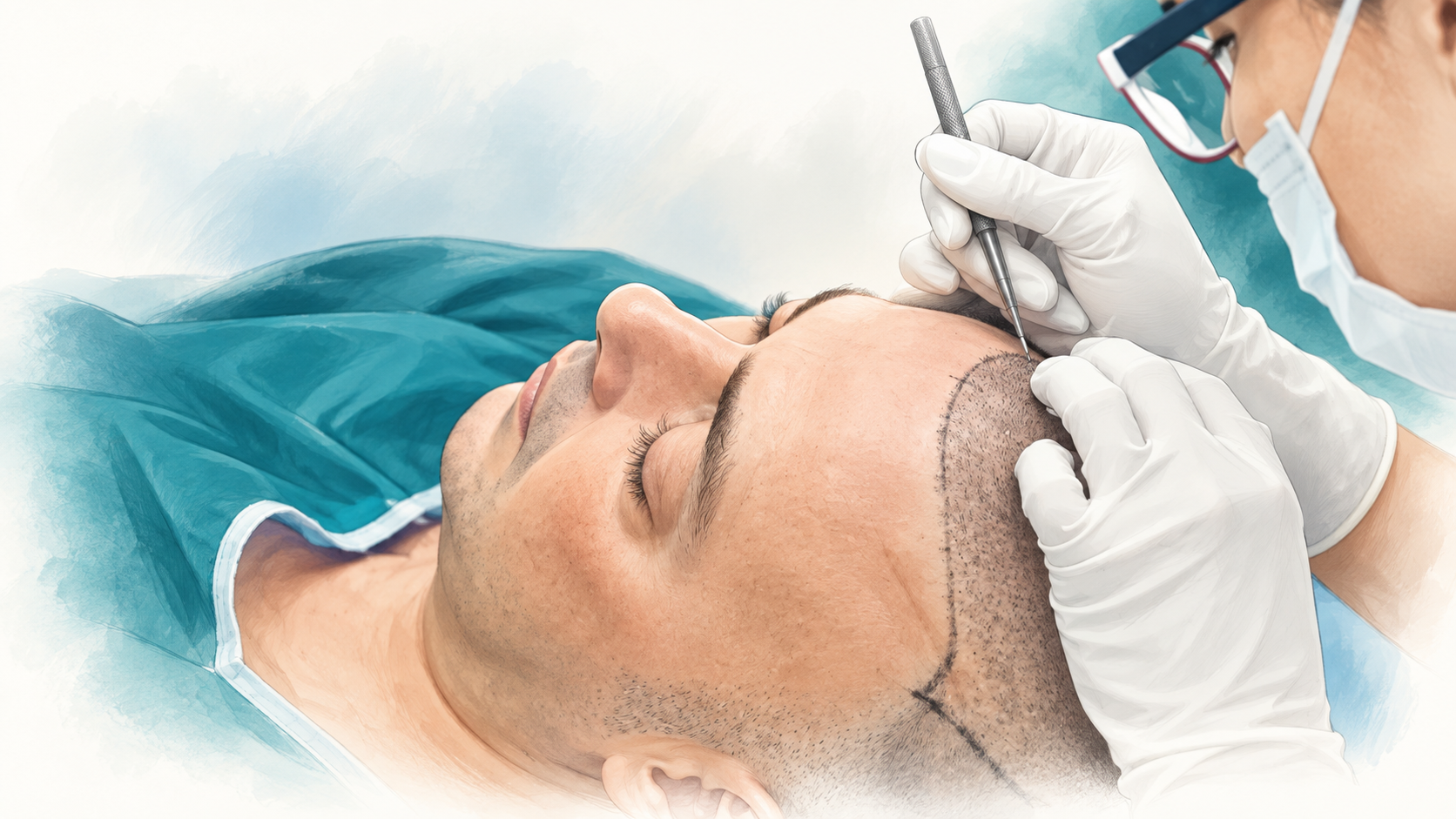
This has a different purpose. It relocates follicles from areas that are relatively resistant to male-pattern hair loss into areas of reduced density. In appropriately selected patients it can create a lasting cosmetic improvement, but it does not stop the continuing loss of surrounding non-transplanted hair. Long-term planning is particularly important for younger men because their eventual pattern of hair loss may not yet be apparent. The available donor hair is limited and must be used carefully. Potential risks include infection, scarring, altered sensation, poor graft growth, an unnatural hairline and excessive depletion of the donor area.
There is no single correct choice. The most appropriate approach depends on the diagnosis, extent of loss, medical history, expectations, tolerance of risk and willingness to undertake continuing maintenance.
Acne and acne scarring
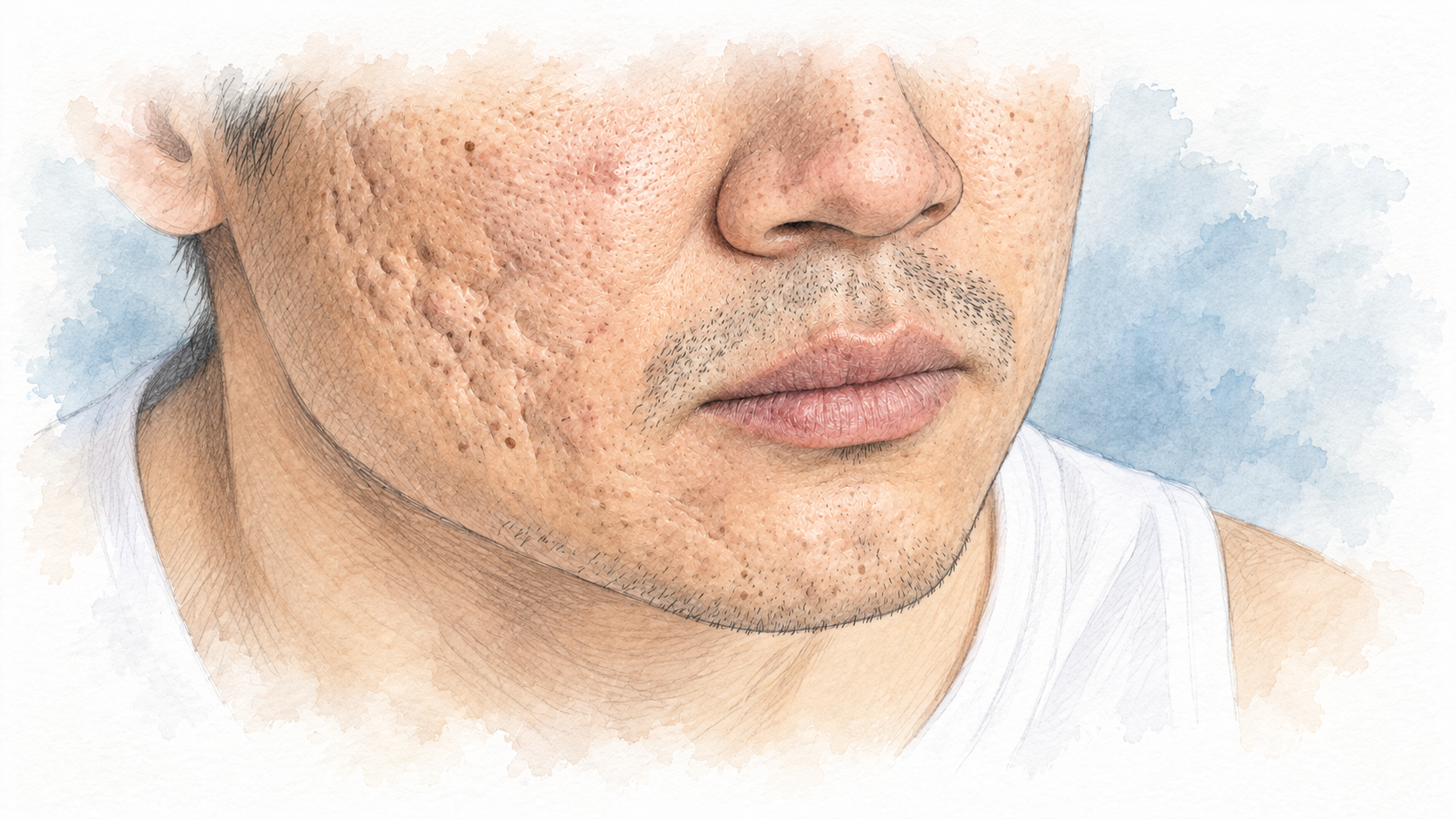
Acne does not always disappear at the end of adolescence. Some men continue to experience active acne through their twenties and beyond, while others are left with redness, pigmentation or permanent structural scars from earlier disease.
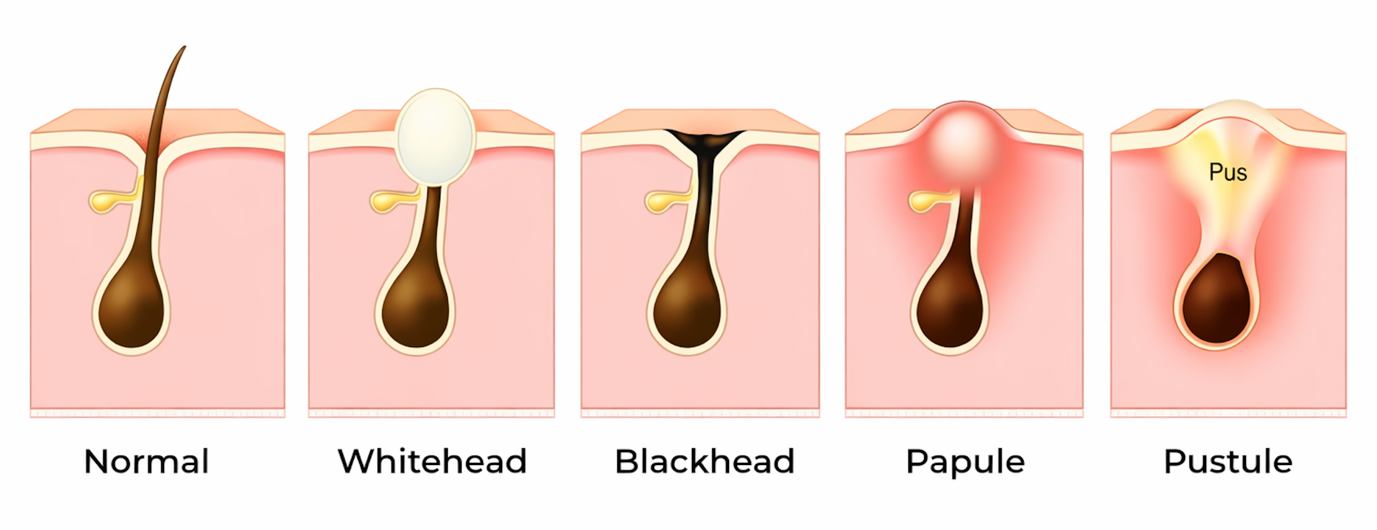
Active acne and acne scarring are related but distinct concerns. If inflammatory acne is continuing, controlling the active condition is generally the priority. Attempting to improve scars while new scars are still forming is unlikely to be a satisfactory long-term strategy.
Once the acne is controlled, the remaining changes can be assessed. Flat red or pigmented marks require a different approach from depressed or tethered scars. Structural acne scarring may include rolling scars, sharply defined boxcar scars and narrow ice-pick scars. Many people have more than one type.
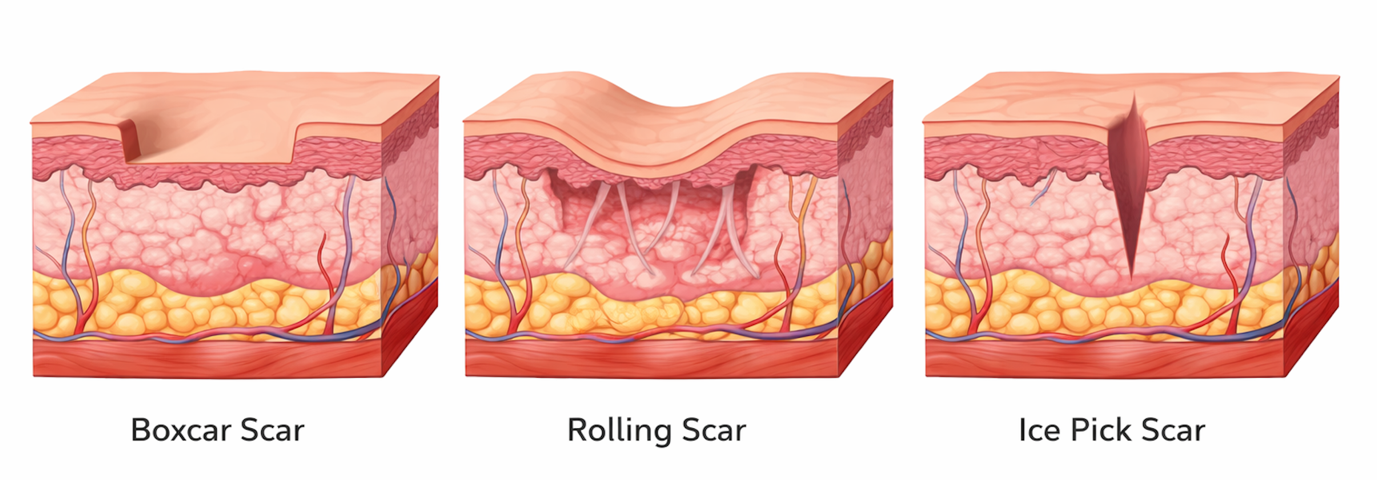
Management depends upon the nature and severity of the problem. It may include suitable skincare, medical assessment of active disease and, where appropriate, procedures intended to improve residual colour or texture. Established structural scars cannot usually be erased completely. A more realistic objective is a worthwhile reduction in their depth, contrast or visibility.
Men may also experience oily skin, enlarged pores, shaving irritation, ingrown hairs and folliculitis. These conditions can resemble one another but may require different management. Repeatedly treating every facial eruption as acne can irritate the skin without addressing the cause.
Sun damage and skin quality
Australian men may accumulate substantial ultraviolet exposure through outdoor work, sport, driving and recreation. Many begin using sunscreen and skincare later in life.
The resulting changes can include roughness, uneven pigmentation, redness, visible facial vessels, dryness and a generally weathered appearance. These changes can make the skin appear older even when facial structure has changed relatively little.

Improving skin health does not necessarily require an elaborate routine. A suitable cleanser, moisturiser and consistent broad-spectrum sun protection provide a practical foundation. Additional skincare should be selected for a specific purpose rather than because a large number of products is presumed to be better.
Procedural options may sometimes be considered for concerns that skincare alone is unlikely to change. The choice should depend upon the diagnosis, skin type, expected benefit, recovery, cost and potential risks, including burns, pigment alteration, infection and scarring.
Any new, changing, bleeding or otherwise suspicious lesion requires medical assessment. An aesthetic skin treatment is not a substitute for appropriate skin-cancer surveillance.
Lines or a tired or severe look
The male face can acquire a tired, worried or severe appearance for several reasons. Strong frown lines may create an impression of concentration or anger. Changes around the eyes can create shadow, while alterations in the cheeks, jawline and neck may change the overall balance of the face.
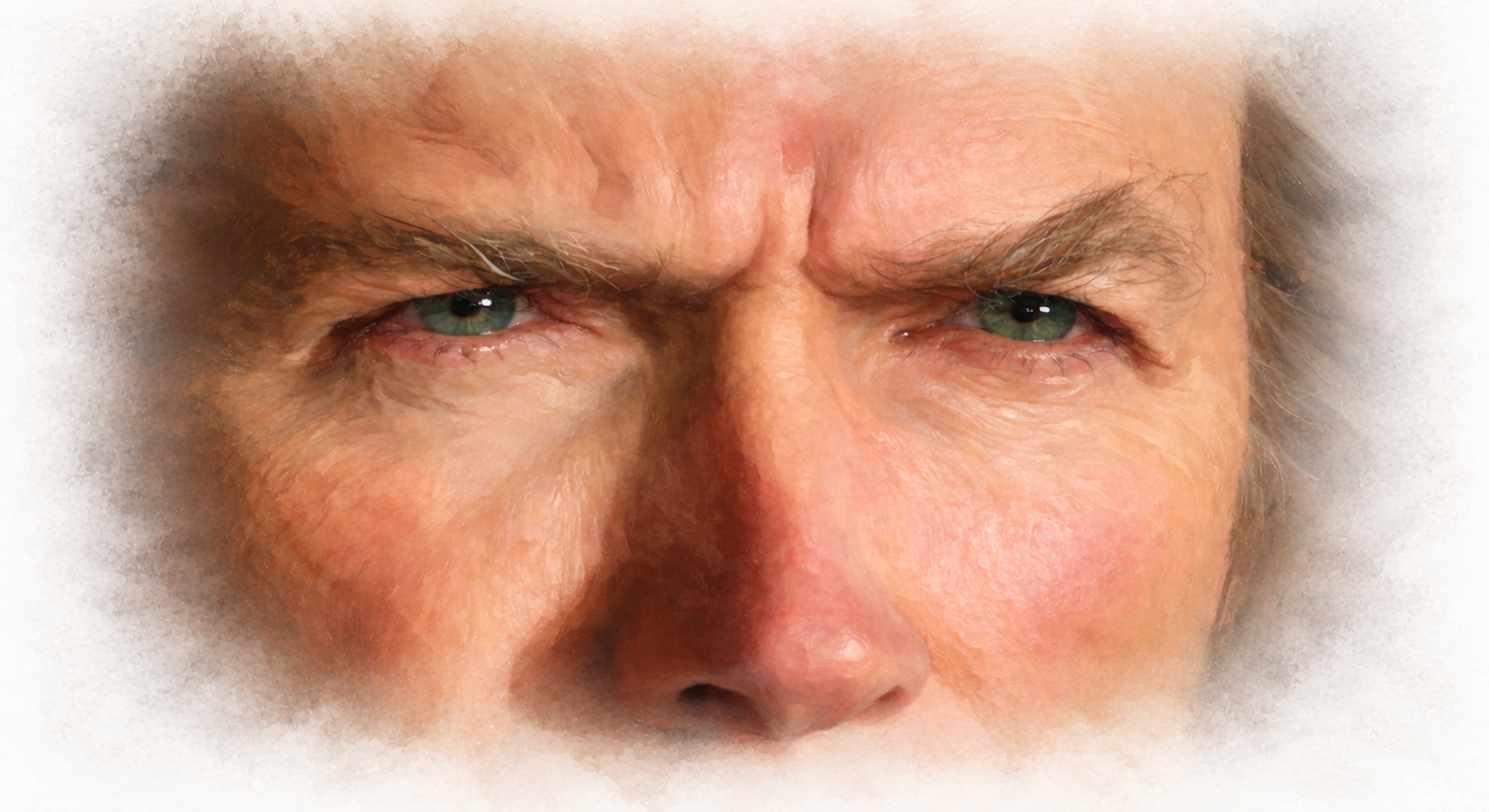
It is important to distinguish the feature a man has noticed from the anatomical reason it appears that way. A line may be produced by repeated movement, skin change, facial structure or a combination of these factors. A tired appearance may arise from shadow and hollowing, but it can also reflect eyelid anatomy, pigmentation, sleep, general health or simply a normal family characteristic.
Not every visible line should be removed. Lines and movement contribute to expression, maturity and character. Men also differ greatly in brow position, forehead shape, facial hair, skeletal proportions and patterns of ageing.
Public information cannot determine which options, if any, would be suitable for an individual. That requires a private consultation in which the anatomy, objectives, alternatives, risks and option of no treatment can be considered without presuming that a particular intervention will be recommended.
Chin, jawline and male facial proportions
A prominent jaw is often associated with masculinity, but male faces vary enormously and there is no ideal jaw shape that should be applied to everyone.
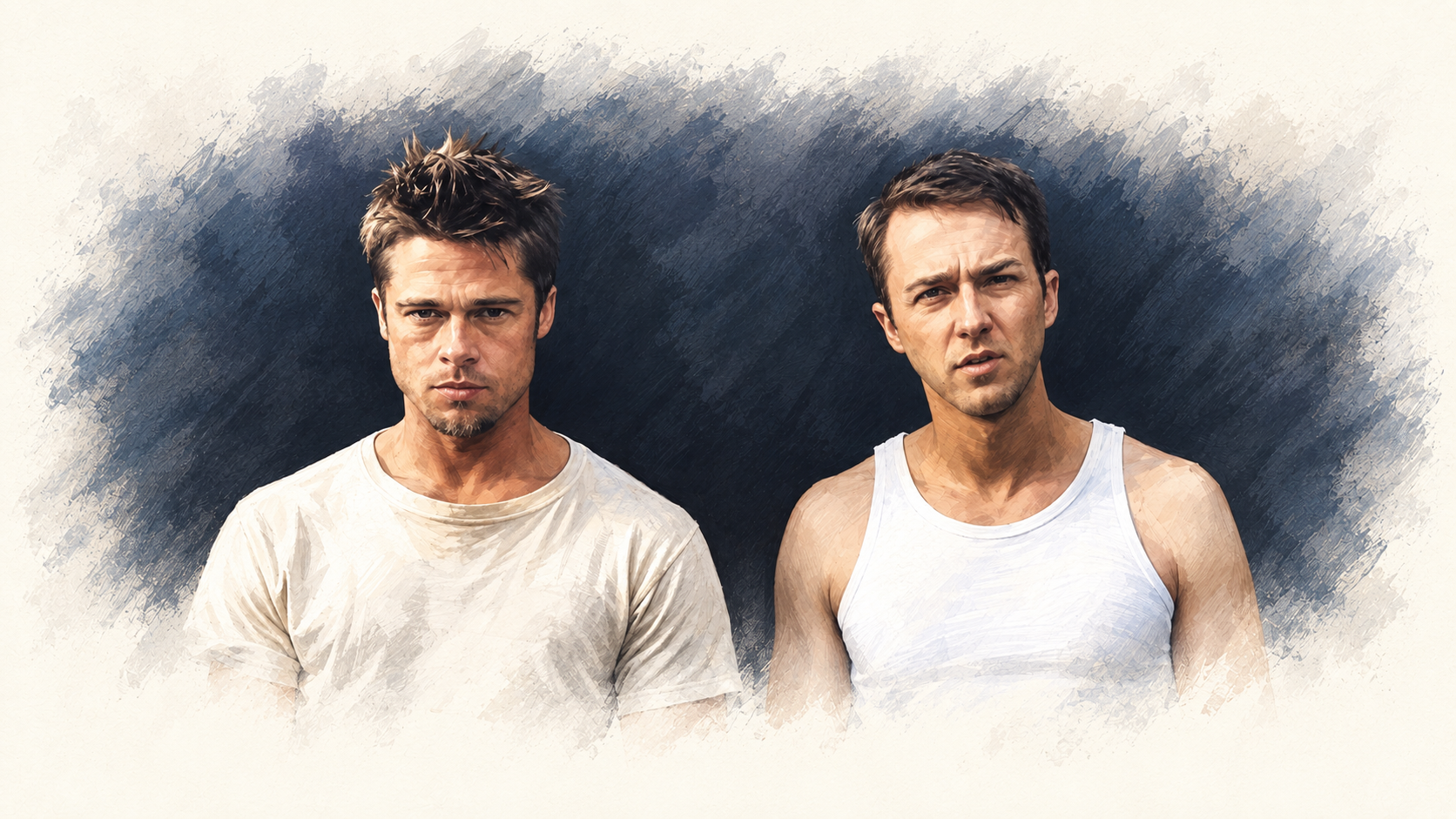
The apparent strength of the lower face depends upon the relationship between the chin, jaw, cheeks and neck. A relatively retruded chin can influence the entire profile. In another man, reduced jawline definition may relate more to skin laxity, tissue distribution or fullness beneath the chin than to the dimensions of the mandible.
The cheeks also influence whether a face appears broad, lean, angular or rounded. These features must be considered together rather than viewing the jaw as an isolated structure.
Any assessment of facial proportions should include front, side and three-quarter views. It should also recognise that increasing the size of a feature does not automatically improve facial balance or make a face appropriately masculine.
If a man wishes to explore whether his facial proportions can be altered, the available options and their risks should be discussed privately after an individual assessment. No procedure should be assumed to be suitable merely because a particular facial shape is currently fashionable.
Unwanted hair and shaving-related problems
Men may seek advice about hair on the back, shoulders, chest, neck or other areas. Some are concerned about the amount of hair, while others experience recurrent irritation, folliculitis or ingrown hairs after shaving.
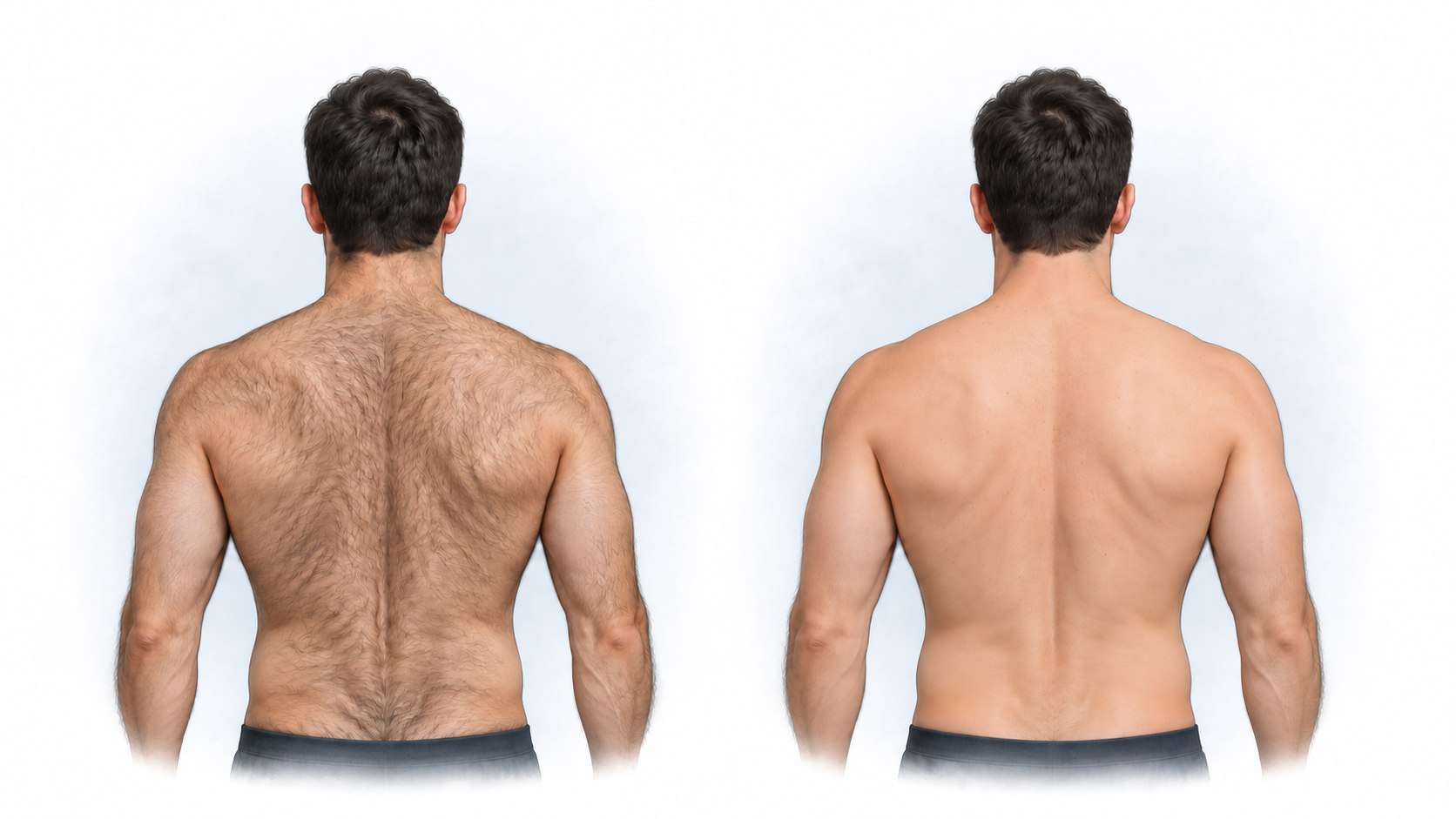
Laser and light-based technologies can provide long-term hair reduction for suitable candidates, although they do not normally remove every hair permanently. The response depends upon hair colour and thickness, skin type, treatment technology and adherence to the recommended schedule. Dark, coarse hair generally responds more readily than grey, very light or red hair.
Careful assessment and selection of settings are important, particularly in darker or recently tanned skin. Potential adverse effects include pain, temporary redness, burns, blistering and changes in pigmentation.
Where recurrent inflammation is the main concern, it is also important to confirm whether the condition is caused by ingrown hair, infection, irritation or another skin disorder.
Weight loss and changes in the male face
Significant weight loss can improve health and body proportions, but it may also change the face and neck. Some men notice hollowing through the temples and cheeks, deeper folds, looser skin or less definition along the jawline.
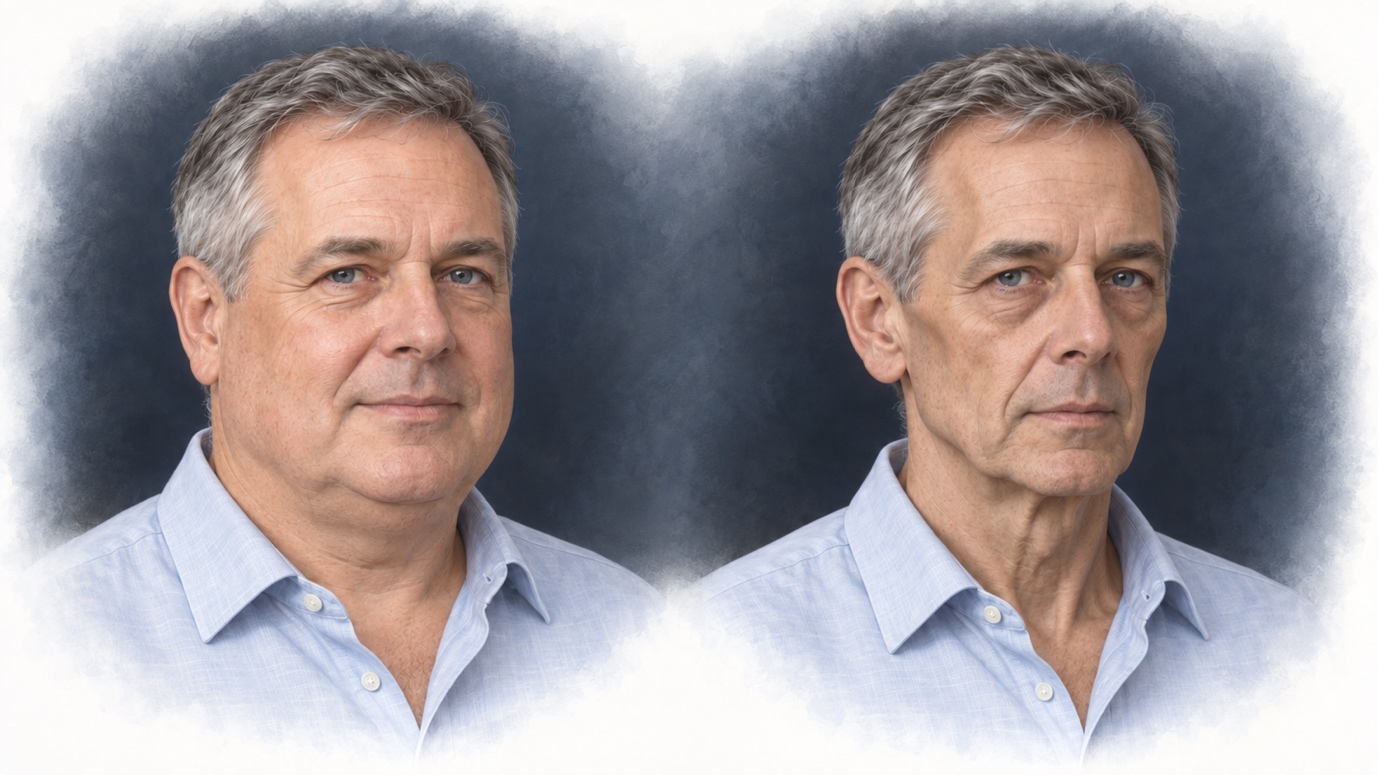
These changes do not necessarily need to be corrected. Some facial leanness may be a natural part of the person’s new appearance, and the health benefits of weight reduction may be much more important than the aesthetic changes.
Where a man is concerned, facial structure, skin quality, tissue laxity and the distribution of remaining fat should be considered separately. An intervention that affects one of these features will not necessarily address the others.
The objective should not be to replace every apparent loss or recreate a younger face. It should be to determine whether any proposed change would be proportionate, realistic and worthwhile.
What makes an aesthetic result look unnatural?
An unnatural result often arises when one feature is considered without reference to the rest of the face.
A face may look unfamiliar if normal movement is lost, facial proportions are exaggerated or age-appropriate features are treated as defects. Highly arched eyebrows, disproportionately rounded cheeks, an oversized jaw or excessive correction of every hollow can all alter identity rather than simply addressing a concern.
More intervention does not necessarily produce a better result. Natural faces retain movement, character, minor asymmetry and normal variation between individuals.
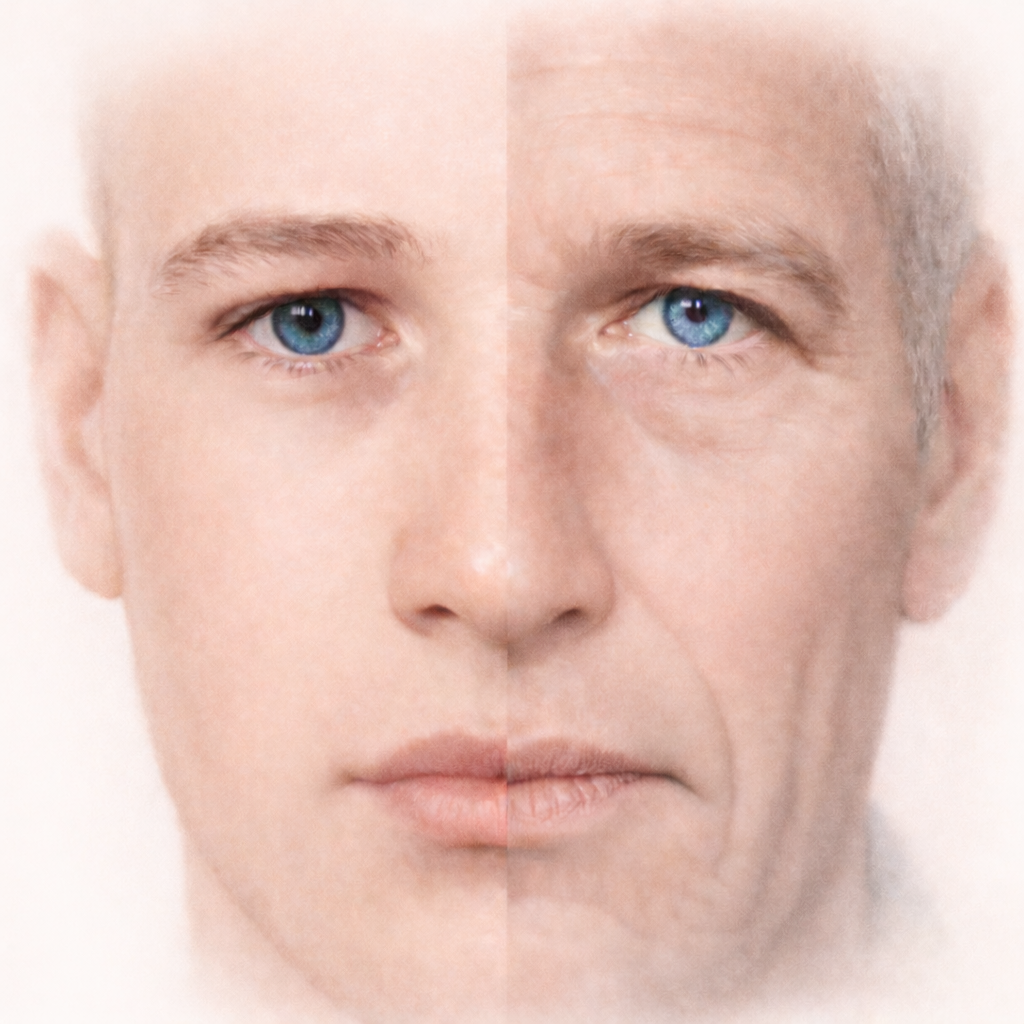
A man in his fifties does not need to resemble a man of twenty-five to appear healthy or attractive. A satisfactory outcome may simply mean that the particular feature troubling him is less prominent while he continues to look recognisably like himself.
Where should a man begin?
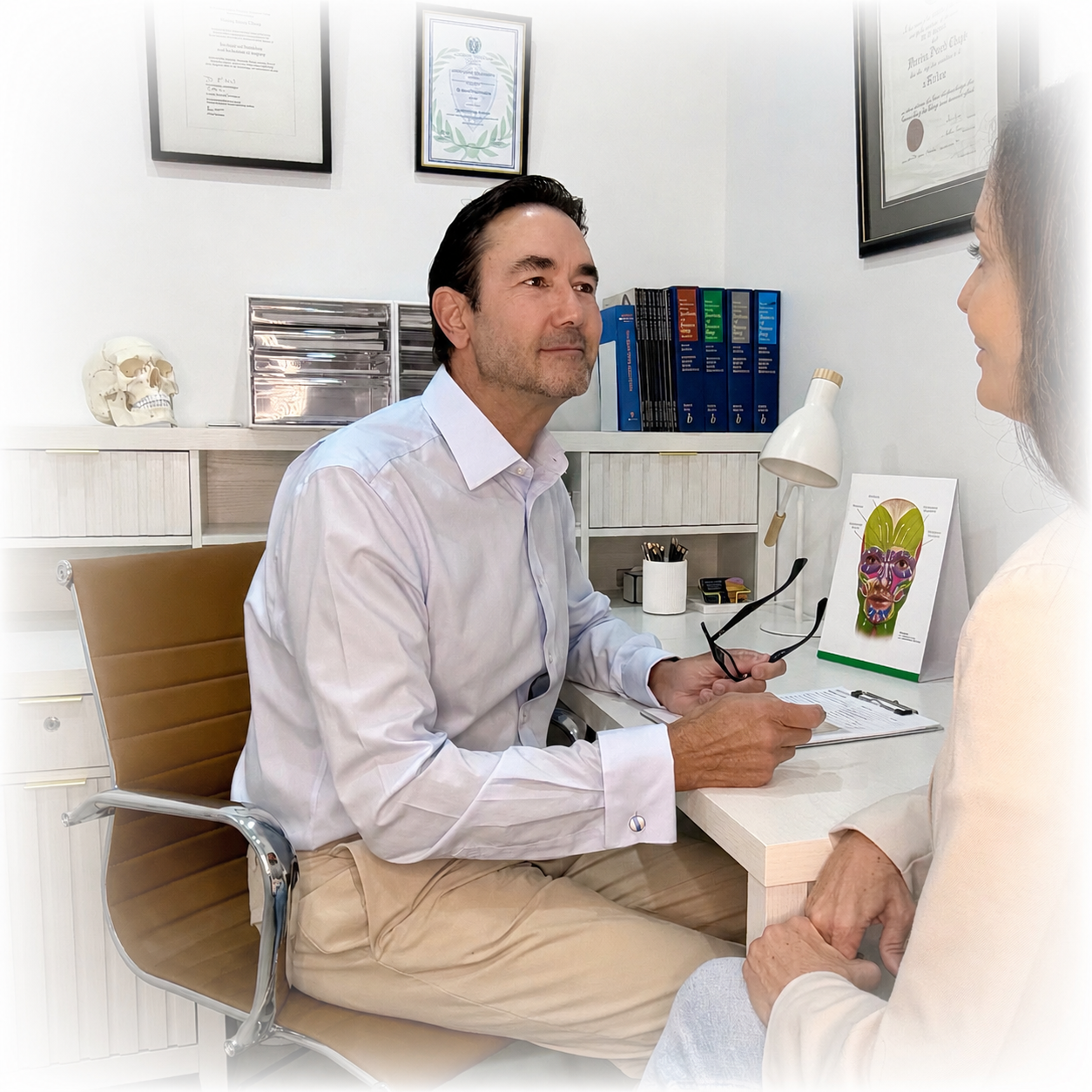
The appropriate starting point is an individual consultation, not a predetermined procedure.
A consultation provides an opportunity to define the concern accurately, consider possible medical causes and discuss what may or may not be realistically achievable. It should include limitations, alternatives, risks, recovery, costs, maintenance and the option of doing nothing.
Sometimes the appropriate recommendation may involve skincare, sun protection, changes in grooming or referral to another health practitioner. In other circumstances, available interventions may be discussed privately once suitability has been properly assessed.
Men’s aesthetic medicine should not encourage men to become preoccupied with every line, scar or anatomical variation. Used responsibly, it can provide clear information and considered advice about particular concerns while respecting normal appearance, personal identity and the right to choose no treatment.